
4. Cluster servant training
Cluster Servant Series: Small Group Structure
In this training, you will learn how to teach about the TIST structure and why Small Groups are so important to TIST.
Estimated Course size in MB: 3
Course Content
Introduction to Small Groups
Small Groups are the Foundation of TIST
Small Groups are the Foundation of TIST
Welcome back! In this training, you will learn about TIST Small Groups and how Small Groups fit into the TIST Program.
TIST Small Groups are the most important part of TIST. TIST Farmers should think very carefully before forming their Small Group because they will be working with those other members for 60 years (the length of the GHG Contract)!
Members of TIST Small Groups share information with each other and other Small Groups, hold each other accountable, and develop new TIST Best Practices.
Again, if you have any questions or observations you would like to share, please join the Intro to TIST Series WhatsApp Group using the following link:
What is a TIST Small Group?
What is a TIST Small Group?
What is a TIST Small Group?
TIST Small Groups are made of 6-12 members who come from at least 3 different families who all live near each other.
How to form a strong Small Group?
A TIST Farmer must belong to a Small Group to join TIST. TIST Farmers should think carefully before forming a Small Group. Small Groups are made up of friends and neighbours, and they are a place for TIST Farmers to grow as leaders. Good TIST Small Groups are made up of people who are hard-working and embody the TIST Values. Men and women in the same Small Group often accomplish the most.
A TIST Small Group's Promises
When a TIST Small Group joins the Program, its members agree to: Commit to planting at least 1,000 trees per year for 5 years
Meet at least 1 time per week
Sign the Greenhouse Gas Contract together
Embody the TIST Values
Use Rotational Leadership and Kujengana
In the video below, a TIST Farmer describes the TIST Small Groups.
The Benefits of TIST Small Groups
The Benefits of TIST Small Groups
TIST Small Groups make it easy to share information and develop leadership skills. After over 20 years of working in farmer-led Small Groups, TIST Farmers have discovered the following benefits of Small Groups:
Men and women in the same Small Group often accomplish the most.
Small Groups help its members be accountable to each other. When one person is successful, the whole group is successful. If someone does something bad, the whole group is harmed.
Small Groups help members share encouragement and experience.
Small Groups are made of people from at least 3 different families so that different people will have the opportunity to lead, meet new people, and learn from new people.
By working together, Small Groups will achieve Big Results with a Low Budget.
Small Groups are nurseries for leadership development.
Rotating Leadership
Rotating Leadership
Rotating Leadership
Small Group Leadership Roles
In a TIST Small Group, there are three leadership roles:
Leader - the Leader is a servant to the Small Group, leads the meetings, and makes sure each person is able to participate.
Co-Leader - The Co-Leader helps to lead the Small Group and also serves as the Small Group time-keeper. The Co-Leader becomes the Leader at the next meeting.
Accountability Person - The Accountability Person reminds the Small Group of their responsibilities and previous and current commitments. The Accountability Person becomes the Co-Leader at the next meeting.
What is Rotating Leadership?
Rotating Leadership is a TIST Best Practice for Small Groups. Leadership is rotated at every meeting (weekly), with the Co-Leader becoming the Leader, the Accountability Person becoming the Co-Leader, and a new Accountability Person being elected.
Leadership alternates between men and women at each level of TIST. This means that if the current Accountability Person is a man, the next one will be a woman. Thus the leadership always alternates between men and women.
How are Leaders elected?
Elections are done democratically and each person in the TIST Small Group has an equal vote.
Benefits of Rotating Leadership
Benefits of Rotating Leadership
Some of the benefits to Rotating Leadership are:
Every person has the opportunity to serve as a leader
Every person has different gifts to offer. We don't always know what they are until we have been given a chance.
There are equal opportunities for both men and women.
Rotating Leadership encourages leadership for new people and for people who are shy.
People can volunteer as a leader without having to commit to leadership for many years.
We get to learn from each other about what makes a good leader.
Rotating Leadership makes sure there there are new ideas and types of leadership used in each Small Group.
In the video below, a TIST Farmer in Kenya discusses Rotating Leadership:
Role of a Leader
Role of a Leader
A TIST Small Group Leader has the following responsibilities:
- Serves the whole Small Group
- Follows the TIST Values
- Coordinates the Small Group meeting and organizes the meeting schedule
- Motivates the Small Group
- Works with the Co-Leader and Accountability Person
- Welcomes and introduces any visitor who might come
- Passes on any communication from the local TIST Cluster Servant
- Reminds Small Group members of the next meeting
- Manages the election of the new Accountability Person
Next, you will learn more about the roles of the Co-Leader.
Role of a Co-Leader
Role of a Co-Leader
A TIST Small Group Leader has the following responsibilities:
- Leads the meeting IF the Leader cannot attend
- Keeps the time of the Small Group meeting
- Takes notes of the meeting and any discussions held
- Reads the previous meeting notes to the Small Group
- Helps train the newly elected Accountability Person
Next, you will learn about the roles of the Accountability Person.
Role of Accountability Person
Role of Accountability Person
A TIST Small Group Leader has the following responsibilities:
- Leads the meeting IF the Leader cannot attend
- Keeps the time of the Small Group meeting
- Takes notes of the meeting and any discussions held
- Reads the previous meeting notes to the Small Group
- Helps train the newly elected Accountability Person
Next, you will learn about the roles of the Accountability Person.
Kujengana
What is Kujengana?
What is Kujengana?
Kujengana is the Swahili word that means "to build up," and it is something that is done at the end of every TIST meeting.
How to Practice Kujengana?
- Before the closing prayer, every person in the Small Group says one specific, positive thing that the Leader did at the meeting. These comments should be specific and refer to something the Leader did or said. Think of it as something that a "fly on the wall" would see or hear. It should not be a general comment like "the Leader did a good job." Instead, it should be a specific comment like "the Leader kept time, smiled, and encouraged all Small Group members to speak."
- Each Small Group member should say something different.
- Everyone gives Kujengana to the Leader. Some groups also give Kujengana to the Co-Leader.
- In response to Kujengana, the Leader simply says "Thank you." There is no discussion of how things could have been done better or differently.
- With Rotating Leadership, everyone gets the chance to give and receive Kujengana.
Why Practice Kujengana?
Each TIST member has their own special talents and gifts and has something valuable to contribute. Kujengana is the practice of saying this value out loud. Like Rotating Leadership, Kujengana is an important part of growing leaders in TIST.
Benefits of Kujengana
Benefits of Kujengana
Kujengana creates wonderful benefits for everyone in TIST:
- It brings confidence to Leaders when they have done something good.
- It helps future Leaders learn from the good ideas of current Leaders.
- It encourages people to become Leaders.
- It helps people to think about what makes a good Leader.
- Every person contributes to every meeting with Kujengana.
- Kujengana is important for growing many leaders in TIST.
- With Kujengana, we learn to identify and celebrate positive qualities in other people.
TIST Clusters
TIST Clusters
TIST Clusters
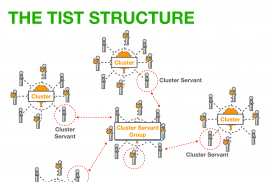
Each TIST Small Group is part of a "Cluster" of Small Groups. A Cluster is a group of 30-50 TIST Small Groups that are within walking distance of each other.
How to form a Cluster?
Each Cluster should have between 30 and 50 Small Groups that have
- Planted at least 200,000 trees total (each Small Group should plant 1,000 trees per year).
- A nursery bed to raise seedlings.
- Approximately 80-100 hectares of land for planting trees.
Cluster Meetings
Every month, each TIST Small Group in the Cluster sends two representatives (one man and one woman) to a Cluster Meeting. A TIST Cluster Servant will organize these Cluster Meetings at a location that is easy to reach by every Small Group in the Cluster.
At the Cluster Meeting, TIST Farmers:
- Receive the monthly TIST Newsletter, which they take back to their TIST Small Group.
- Receive payment voucher for their TIST Small Group's tree planting activity.
- Share Best Practices and news with members of other TIST Small Groups in the area.
- Receive additional training.
Clusters have the same roles as the TIST Small Groups: a Leader, Co-Leader, and Accountability Person.
Cluster Leaders
Cluster Leadership Roles
Clusters are also led by a Leader, Co-Leader, and Accountability Person who practice Rotating Leadership. However, Clusters rotate Leadership every 4 months. This means that each member in a Cluster will have a total of 12 months of service (4 months as Accountability Person, 4 months as the Co-Leader, and 4 months as the Cluster Leader).
Just like in the TIST Small Groups, women and men alternate roles. And again, just like in the TIST Small Groups, when a Cluster Leader ends their tenure the Co-Leader is the new Leader, the Accountability Person becomes the new Co-Leader, and a new Accountability Person is elected.
The Cluster Leader, Co-Leader, and Accountability Person have the same responsibilites as in the TIST Small Groups. They also have additional responsibilities:
Cluster Leader
- Coordinates quantification and trainings for the Small Groups.
- Helps Cluster to remain strong and united.
- Encourages the use of Conservation Farming practices.
- Works with the Accountability Person to ensure a monthly Cluster Report and Accounts Report are created, accurate, and sent to TIST Leadership.
- Helps recruit and register more TIST Small Groups.
- Helps TIST Small Groups have their Green House Gas contracts signed, scanned, and uploaded.
- For payments, gets vouchers and other materials before Cluster Meeting. Works with Accountability Person and the Cluster Servants to make sure the proper payment process is followed and communicates any questions or problems to TIST leaders and coordinators.
Cluster Co-Leader
- Assists the Cluster Leader as needed.
- Maintains accurate meeting notes and records used in creating the Cluster Reports.
Cluster Accountability Person
- Keeps Cluster Records organized in a Cluster Record Book.
- Allows inspection of Cluster Records to Cluster members and TIST leaders.
- Sends monthly Cluster Report to TIST leaders.
- During payments, hands out vouchers to the TIST Small Groups that have two members present, reviews vouchers, communicates with payment support specialists, and follows the payment process accurately and honestly.
Benefits of Clusters
Benefits of Clusters
There are many benefits to the TIST structure of Small Groups and Clusters:
- Clusters help TIST Farmers create Big Results with Low Budget so there is more carbon credit money left for TIST Farmers.
- Clusters help TIST Farmers learn from each other about local challenges and successes and share TIST Best Practices.
- Clusters allow Small Groups to easily talk to each other.
- TIST Cluster Servants are able to train many TIST Farmers at one time, who will then take that training back to their Small Groups.
- Cluster Meetings provide an efficient way to pay TIST Farmers.
- Because Clusters are larger (60-100 people), there are opportunities for other programs like table banking.
- Cluster Meetings provide an efficient way to give out the TIST newsletter, called Mazingira Bora (Kenya), The Tree (Uganda), and Chezhimai (India).
In the video below, a TIST Farmer in Kenya talks about the importance of Cluster Meetings in passing on information and sharing the TIST newsletter.
Conclusion
Conclusion
Thank you for participating in this training! And as always, we value your feedback, so please take a few minutes to complete the course feedback survey before moving on.
Training Feedback Survey
Training Feedback Survey
Thank you for participating!
Sideload 4. Intro to TIST: TIST Structure
Sideload 4. Intro to TIST: TIST Structure